

Energy efficiency has become an important consideration for homeowners across Ireland. If you're planning energy upgrades to your property or simply looking to reduce your energy bills, understanding the BER energy rating scale is a great place to start. Alongside making your home more efficient, it's equally important to make sure it's protected with the right home insurance.
What is a BER rating?
A Building Energy Rating (BER) measures the energy efficiency of a residential property. Similar to the energy labels found on household appliances, homes are rated from A1 (most energy efficient) to G (least energy efficient).
A BER rating estimates how much energy a property is likely to use for heating, hot water, ventilation and lighting under standard conditions. The more energy efficient your home is, the less energy it should require to keep it comfortable throughout the year.
Every BER certificate also includes a BER advisory report, which recommends practical improvements that could improve your home's energy performance and move it higher up the BER scale.
Understanding the BER energy rating scale
The BER energy rating scale ranges from A to G:
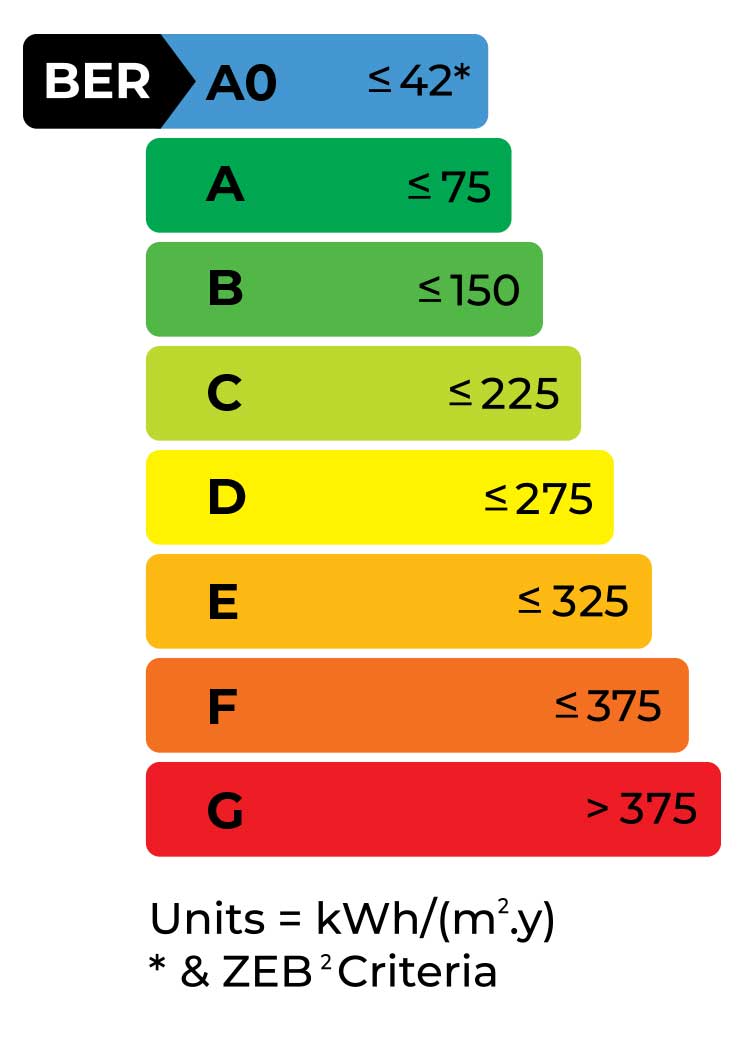
A BER D2 energy rating is common in older homes. While it sits below average on the BER scale, improvements such as insulation upgrades or replacing an older heating system can significantly improve performance.
Who carries out a BER assessment?
A BER assessment must be completed by a registered BER assessor.
During the assessment, the assessor examines key features of your property, including insulation, your heating system, ventilation, windows and any renewable energy technologies. The home's energy performance is then calculated using the Dwelling Energy Assessment Procedure (DEAP), Ireland's official methodology for BER assessments.
Once completed, your property is issued with a BER certificate and a unique BER Number. The results are recorded on the National BER Register, which is managed by the Sustainable Energy Authority of Ireland (SEAI).
How is a BER rating calculated?
A BER assessor considers a range of factors when carrying out a BER assessment, including:
- Wall, roof and cavity wall insulation
- Windows and doors
- Your heating system
- Hot water cylinders
- Ventilation
- Lighting
- Renewable energy technologies, including Heat Pumps, solar PV panels and solar thermal panels
The assessment uses standard occupancy assumptions, meaning it measures the energy performance of the building itself rather than the habits of the people living there.
Why BER ratings matter
A valid BER certificate is legally required when selling or renting most residential properties in Ireland.
For buyers, it provides an indication of future energy costs and highlights whether further improvements may be needed. For homeowners, a higher BER rating can offer several benefits:
- Lower heating and electricity bills
- A more comfortable home throughout the year
- Reduced carbon dioxide emissions
- Increased appeal to potential buyers
- Potentially higher property value
As energy efficiency becomes more important to homeowners and buyers alike, a strong BER rating can make a property stand out.
How a better BER can reduce energy bills
Improving your BER rating can lead to noticeable savings on household energy costs.
Better insulation helps reduce heat loss, while a more efficient heating system or Heat Pump uses less energy to keep your home warm. Renewable technologies, such as solar PV panels and solar thermal panels, can also reduce your reliance on grid electricity and lower your energy bills over time.
Although some improvements require an upfront investment, the long-term savings often make them worthwhile.
Simple improvements that can increase your BER
Improving your BER doesn't always require a complete renovation. A combination of smaller upgrades can also make a significant difference.
Some of the most effective improvements include:
- Installing attic, wall or cavity wall insulation
- Upgrading to an energy-efficient Heat Pump
- Replacing an older heating system
- Window replacement with modern double or triple glazing
- Installing smart heating controls
- Replacing older hot water cylinders with more efficient models
- Installing solar PV panels
- Installing solar thermal panels
Your BER advisory report identifies the improvements likely to have the biggest impact on your home's energy performance.
Grants available for improving your home's energy efficiency
Many homeowners are eligible for financial support when carrying out energy upgrades.
Grants may be available for improvements such as:
- Attic and wall insulation
- Heat pump installation
- Solar PV systems
- Window and door upgrades
- Whole-home energy retrofits
Many of these grants are administered by the Sustainable Energy Authority of Ireland (SEAI), helping homeowners reduce the cost of improving their property's energy efficiency.
What is the minimum BER rating for new homes?
Current Irish building regulations require newly constructed homes to achieve high standards of energy performance.
While the regulations focus on meeting overall energy performance requirements rather than a specific BER label, most modern developments are designed as A-rated homes. These homes benefit from high-quality insulation, efficient heating systems and renewable energy technologies that help reduce energy consumption.
Some protected structures may be subject to different requirements when carrying out energy improvements, so it's important to understand any planning or conservation restrictions before beginning major works.
Protect your investment
Improving your home's energy efficiency is an investment that can deliver long-term benefits, from lower energy bills and increased comfort to a more attractive property if you decide to sell. Many of the upgrades that improve a BER rating, such as better insulation, an upgraded heating system, a heat pump or solar PV panels, can also contribute to lower carbon dioxide emissions and reduced running costs.
Before starting any major energy upgrades, it's worth arranging a BER assessment to understand your home's current performance and identify the improvements that will have the greatest impact.
As you invest in your home, it is equally important to make sure it's protected. Reviewing your home insurance ensures your property, and the improvements you've made, has the cover it needs, giving you added peace of mind for one of your biggest investments.
START HOME QUOTE